
STEP-BY-STEP BUSINESS SALE GUIDANCE
How to Sell a Business
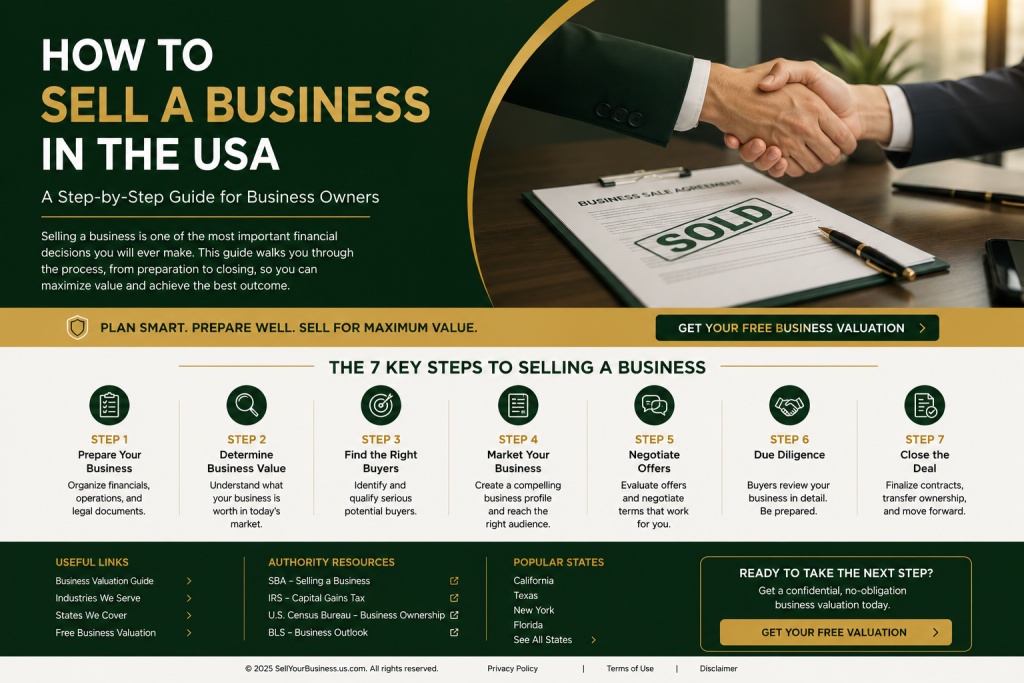
How to sell a business depends on preparation, valuation, confidentiality, buyer screening, negotiation and due diligence. A strong process helps protect value and reduce avoidable sale risk.
This guide explains the main steps owners should take before going to market, from understanding value to preparing evidence and managing buyer interest.


How to Sell a Business: The Practical Process
Selling a business works best when the owner prepares before speaking to buyers. The process should create confidence, protect confidentiality, explain the value, screen buyers properly and reduce the risk of renegotiation during due diligence.
A rushed sale can expose sensitive information, attract weak buyers, create unrealistic valuation expectations and leave the owner reacting to buyer questions instead of controlling the process.
Define the Exit Goal
Decide whether your priority is maximum price, speed, succession, retirement income, staff protection, buyer fit or a phased handover.
Get a Valuation
Understand maintainable earnings, buyer demand, assets, risk, transferability and likely deal structure before setting expectations.
Prepare the Evidence
Organise accounts, contracts, management information, staff roles, customer data, leases, systems and growth evidence.
Protect Confidentiality
Use blind summaries, buyer screening, staged disclosure and non-disclosure agreements before releasing sensitive information.
Negotiate Offers
Compare price, cash at closing, deferred payment, seller financing, earn-outs, warranties, transition support and completion risk.
Complete Due Diligence
Buyers will test financial, legal, operational, commercial, staff, tax and property information before completing the purchase.
CONFIDENTIAL VALUATION
Get a Clearer View Before You Go to Market
Request a confidential valuation so you can understand likely value, buyer expectations and the preparation issues that may affect the final deal.
Request My Business ValuationWhat to Prepare Before Selling
Preparation reduces uncertainty. Buyers want a business they can understand, finance, operate and grow. The more organised the information, the easier it is to defend value and maintain momentum.
Financial Preparation
- Three years of accounts or tax returns
- Year-to-date management accounts
- Adjusted earnings and owner add-backs
- Revenue split by customer, service or location
- Debt, working capital and asset schedules
Operational Preparation
- Staff structure and key employee roles
- Customer and supplier concentration
- Contracts, licences, permits and leases
- Systems, processes and handover notes
- Pipeline, marketing data and growth opportunities
Use the business sale preparation checklist and the due diligence checklist to organise the main evidence.
Key Guides for Selling a Business
These pages support the full sale journey, from valuation and confidentiality through to buyer search, preparation, timing and exit planning.
Explore by Location and Industry
Location and industry can affect buyer demand, market risk, staffing, customer concentration, transferability and valuation expectations. Use these hubs to move from general sale guidance into more specific market context.
State and City Guides
Browse state and city pages for regional selling context and nearby-market links.
Browse state guidesIndustry Guides
Review industry-specific selling pages for sector valuation drivers and buyer concerns.
Browse industry guidesUseful Official and Authority Resources
These official resources provide background reading on sale planning, business tax, compliance and market data. They do not replace legal, accounting, tax or valuation advice.
Frequently Asked Questions About How to Sell a Business
What is the first step in selling a business?
Start by clarifying your goal and requesting a realistic valuation. This helps you understand whether the business is ready for market and what preparation may be needed.
Can I sell a business confidentially?
Yes. A controlled process can use blind summaries, buyer screening, non-disclosure agreements and staged information release.
How long does it take to sell a business?
The timeframe depends on business quality, buyer demand, valuation expectations, preparation and due diligence. Better-prepared businesses are usually easier to assess.
What information will buyers ask for?
Buyers commonly request accounts, tax returns, management figures, customer data, contracts, staff information, leases, asset details and evidence supporting add-backs or growth claims.
Should I speak to buyers before getting a valuation?
Usually no. A valuation helps you set expectations and avoid releasing sensitive information before you understand the likely value range and sale strategy.
NEXT STEP
Request a Confidential Business Valuation
Use this guide to prepare, then request a valuation when you are ready to understand what your business could be worth and what buyers may need to see.
Get My Free Business ValuationSelling a Business Successfully Starts Before You Go to Market
Many owners start the sale process by asking, “Who can find me a buyer?” That is understandable, but it is not usually the best first question. A better question is, “What would a serious buyer need to believe before making a strong offer for this business?”
Buyers do not simply buy turnover. They buy maintainable profit, reliable systems, future opportunity, transferable customer relationships and reduced risk. That is why preparation, valuation and buyer positioning matter so much.
If you have not yet established a realistic value, start with our business valuation guide. If you are ready to understand the wider selling process, this page explains the practical steps from preparation to completion.
What This Guide Covers
- Decide why you are selling
- Value the business properly
- Prepare your financial records
- Improve the business before sale
- Identify likely buyer types
- Protect confidentiality
- Prepare sale documents
- Market the business carefully
- Manage offers and negotiation
- Handle due diligence
- Close the sale
- Plan what happens after completion
How to Sell a Business: Step-by-Step
1. Decide Why You Are Selling
Before approaching buyers, be clear about your reason for selling. Buyers will ask. Your answer can affect confidence, negotiation and deal structure.
- Are you retiring?
- Do you want to release capital?
- Are you planning a new venture?
- Is the business becoming too dependent on you?
- Are market conditions favourable?
A strong reason for sale reassures buyers. A vague or pressured reason can weaken your position.
2. Value the Business Properly
A realistic valuation is one of the most important parts of selling a business. If the asking price is too high, serious buyers may not engage. If it is too low, you may leave money on the table.
Most buyers look at adjusted profit, cash flow, risk, growth, owner dependence, customer concentration and comparable market evidence. For many small and mid-sized businesses, valuation is based on a multiple of Seller’s Discretionary Earnings or EBITDA.
Read our detailed business valuation guide before setting an asking price.
3. Prepare Your Financial Records
Buyers and lenders will want evidence. Clean records reduce uncertainty and make the business easier to assess.
- Last three years of accounts or tax returns
- Year-to-date management accounts
- Revenue by product, service or customer type
- Gross margin and net profit trends
- Owner add-backs and one-off costs
- Asset lists, leases, loans and liabilities
If your financials are messy, fix them before going to market. Poor records can reduce buyer confidence and lower the final price.
4. Improve the Business Before Sale
The best time to improve a business is before buyers start asking difficult questions. Even modest improvements can make the business more attractive.
- Reduce reliance on the owner
- Document key systems and processes
- Secure important contracts or supplier terms
- Resolve staff, lease, legal or licensing issues
- Improve management reporting
- Reduce unnecessary costs
- Strengthen recurring revenue where possible
5. Identify Likely Buyer Types
Different buyers value businesses differently. Your likely buyer pool may include owner-operators, local competitors, strategic acquirers, private investors, family offices or private equity-backed groups.
A strategic buyer may pay more if the business gives them customers, territory, systems, staff or capabilities they want. An owner-operator may focus more on cash flow, financing and day-to-day transition.
For sector-specific considerations, visit our business sale industries hub.
6. Protect Confidentiality
Confidentiality matters. If staff, customers, suppliers or competitors hear about a possible sale too early, it can create unnecessary risk.
- Use blind marketing materials where appropriate
- Screen buyers before disclosing sensitive details
- Use confidentiality agreements
- Release information in stages
- Avoid giving competitors unnecessary detail too early
7. Prepare Sale Documents
A serious buyer will expect clear information. Depending on business size, this may include a confidential information memorandum, summary profile, financial pack, operational overview and due diligence file.
- Business overview
- Products and services
- Customer and revenue analysis
- Staff and management structure
- Financial summary and add-backs
- Growth opportunities
- Reason for sale
- Transition support available from the seller
8. Market the Business Carefully
Marketing a business for sale is not the same as advertising a product. The aim is to reach qualified buyers while protecting confidentiality and positioning the opportunity properly.
Some businesses are marketed broadly through business-for-sale channels. Others are approached discreetly through targeted buyer outreach. The right method depends on business size, sector, sensitivity and likely buyer type.
If you are looking at a specific state market, start with our state selling guides, including Texas and Florida.
9. Manage Offers and Negotiation
The highest headline offer is not always the best offer. You need to understand the structure, timing, conditions and risk behind each proposal.
- Cash at closing
- Seller financing
- Earn-outs
- Asset sale versus stock sale
- Working capital requirements
- Transition period
- Non-compete or consultancy obligations
Before accepting an offer, compare the certainty of completion, not just the headline price.
10. Handle Due Diligence
Due diligence is where the buyer checks whether the business is really as presented. This usually covers financial, legal, operational, commercial and tax matters.
- Financial statements and tax records
- Customer contracts and revenue concentration
- Employee records and compensation
- Leases, licenses and permits
- Supplier agreements
- Debt, liens and liabilities
- Intellectual property and systems
Good preparation makes due diligence smoother. Poor preparation often leads to price reductions, delays or failed deals.
11. Close the Sale
Once due diligence is complete, the parties move toward final legal documents, finance approval, closing adjustments and completion. Professional legal and tax advice is important at this stage.
The IRS provides official guidance on the sale of a business, including how buyer and seller consideration is treated for tax purposes.
12. Plan What Happens After Completion
Many deals include a transition period. The seller may help introduce customers, train the buyer, support staff handover or remain available for a limited period.
Think carefully about what you are prepared to do after completion. This should be agreed clearly before closing.
Important: This guide is general information, not legal, tax or financial advice. Business owners should take advice from qualified professionals before agreeing terms or completing a transaction.
What Buyers Look for When Buying a Business
Understanding buyer thinking helps you prepare properly. Buyers are usually trying to answer one simple question: “If I buy this business, can I maintain or improve its earnings without taking unacceptable risk?”
| Buyer Question | Why It Matters | How to Prepare |
|---|---|---|
| Are the profits real and repeatable? | Buyers want maintainable earnings, not one-off spikes. | Prepare clean accounts, add-back explanations and revenue trend analysis. |
| How dependent is the business on the owner? | High owner dependence increases transition risk. | Document systems, delegate responsibility and strengthen management support. |
| Are customers concentrated? | Reliance on a few customers can reduce value. | Show customer spread, retention, contract terms and pipeline quality. |
| Can the business grow? | Buyers often pay more when growth opportunities are credible. | Prepare a realistic growth plan supported by evidence. |
| Are there hidden liabilities? | Legal, tax, lease, staff or debt issues can damage a deal. | Resolve known issues early and disclose material matters properly. |
| Is the asking price justified? | Buyers need evidence behind the valuation. | Use a proper valuation method and support it with financial evidence. |
For a deeper explanation of valuation methods, multiples and buyer risk factors, see our business valuation guide.
Common Mistakes When Selling a Business
Many sale problems are avoidable. The most common mistakes usually happen before the business is properly prepared.
Going to market too early
Approaching buyers before the financials, documents and valuation are ready can weaken confidence and reduce negotiating leverage.
Setting an unrealistic asking price
An inflated price can deter serious buyers, while a weak price can leave value behind. Pricing should be supported by evidence.
Ignoring confidentiality
Loose confidentiality can unsettle staff, customers and suppliers. Information should be released carefully and in stages.
Failing to explain add-backs
Owner benefits and one-off costs need clear evidence. Unsupported add-backs are often challenged by buyers.
Depending too heavily on the owner
If the owner controls every customer, supplier and decision, the buyer may see more risk and offer less.
Accepting the wrong deal structure
The headline price is only one part of the deal. Payment timing, seller financing, earn-outs and conditions can all change the real value.
Helpful Selling Resources
Use these related guides to go deeper into valuation, sector-specific issues and local selling considerations.
Business Valuation
Understand how buyers think about value, profit, risk, multiples and deal structure.
Read the valuation guideSell Your Business
Explore the wider process of preparing, positioning and selling your company.
View selling guideIndustry Guides
Different sectors have different valuation drivers, buyer pools and risk factors.
Browse industry guidesState Guides
Business-sale conditions and buyer demand can vary by state and local market.
Browse state guidesSell a Business in Texas
Review Texas-specific selling considerations, valuation factors and buyer demand.
View Texas guideSell a Business in Florida
Review Florida-specific selling considerations, valuation factors and buyer demand.
View Florida guideGet Professional Advice Before Completing a Sale
Selling a business can involve legal, tax, financing, employment, lease, regulatory and deal-structure issues. The larger or more complex the business, the more important it is to use qualified advisers before signing final documents.
Frequently Asked Questions About Selling a Business
What is the first step in selling a business?
The first step is usually to understand the value of the business and prepare the financial records. Without a realistic valuation and clean information, it is difficult to attract serious buyers or defend the asking price.
How long does it take to sell a business?
The timescale depends on the size, profitability, sector, buyer demand and readiness of the business. A prepared business with clean records can move faster, while businesses with weak financials, owner dependence or unresolved issues may take longer.
How do I know what my business is worth?
Business value is usually based on maintainable earnings, cash flow, risk, growth potential, assets, customer quality and market demand. Many small businesses are valued using a multiple of SDE, while larger companies may be valued using EBITDA.
Should I tell my employees I am selling the business?
Usually not at the early stage. Confidentiality is important. Staff communication should be planned carefully and usually happens later in the process, depending on the business, buyer and legal advice.
Can I sell a business that depends heavily on me?
Yes, but heavy owner dependence may reduce buyer confidence and valuation. You can improve the position by documenting processes, delegating responsibility and creating a clear transition plan.
Do I need a business broker to sell my business?
Not every business uses a broker, but a broker can help with valuation, confidential marketing, buyer screening, negotiation and deal management. This can be especially useful for larger, more complex or confidential sales.
What documents are needed to sell a business?
Common documents include financial statements, tax returns, management accounts, asset lists, lease documents, customer information, supplier agreements, employee details, licenses, contracts and a summary of operations.
What is due diligence when selling a business?
Due diligence is the buyer’s investigation of the business before completing the sale. It usually covers financial, legal, tax, commercial, operational and employment information.
Thinking About Selling Your Business?
Start by understanding what your business may be worth, what buyers are likely to question, and what you can improve before going to market.